
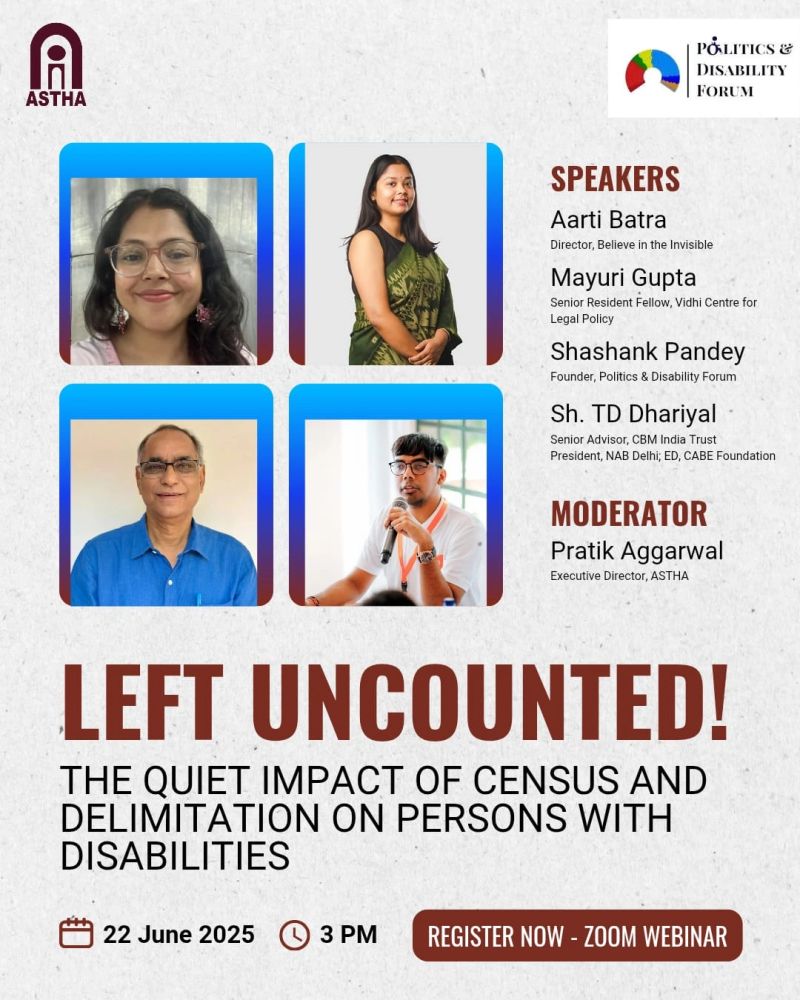
ON 22nd June 2025, ASTHA and the Politics and Disability Forum conducted the first webinar soon after the official notification of the Census in the Gazette of India.
Discussion points of the sessions were:
1) Understanding the historical data collection of Disability in the Census
2) The role of enumerators in the Census exercise.
3) How will the census data be used for the delimitation exercise, and why is it important?
4) What shall be the ideal methodology for collecting Disability related data during the census?
Challenges in Disability Data Reporting
Mr. TD Dhariyal highlighted that the definition of disability in the Rights of Persons with Disabilities Act is functional, which differs from the method used to assess disability percentages, leading to variations in data.
He emphasized the importance of carefully designed questions to ensure accurate reporting and discussed how underreporting affects funding allocations for various sectors supporting persons with disabilities.
He also shared personal experiences of encountering a lack of data when proposing initiatives, such as expediting court hearings for persons with disabilities, and stressed the need for accurate data to secure funding and implement effective programs.
Delimitation and Census impact
Ms Mayuri Gupta discussed the process of delimitation in India, explaining how electoral constituencies are determined based on population data from the census.
She highlighted that the next census in 2027 will likely be used for the next delimitation, which could impact states differently due to changing demographics.
Mayuri also emphasized the importance of accurate census data for fair political representation and resource allocation, particularly for marginalized social groups.
She used examples like ST and women reservations to illustrate how census data influences policy decisions and political power distribution.
Inclusive data collection
Ms Aarti discussed the undercounting of persons with disabilities (PWDs) in India, highlighting the lack of accurate data and its impact on public policy, budget allocation, and electoral representation.
She emphasized the need for inclusive disability data in the 2027 census and future delimitation exercises.
Aarti explained the challenges in accurately measuring disability due to a lack of standardized definitions, cultural stigmas, and inadequate data collection methods.
She suggested using alternative data collection tools like the Washington Group Survey and proposed designing surveys inclusively by involving PWDs and ensuring accessibility.
Aarti proposed the idea of “preparing for the extremes” as the data collection methodology and formulation of objective indicators for all 21 disabilities in the RPwD Act to assist the enumerator in determining the correct nature of the disability as disclosed by the people.
The detailed report of the session is attached below.
 INDIA DISABILITY WATCH
Leave a comment