
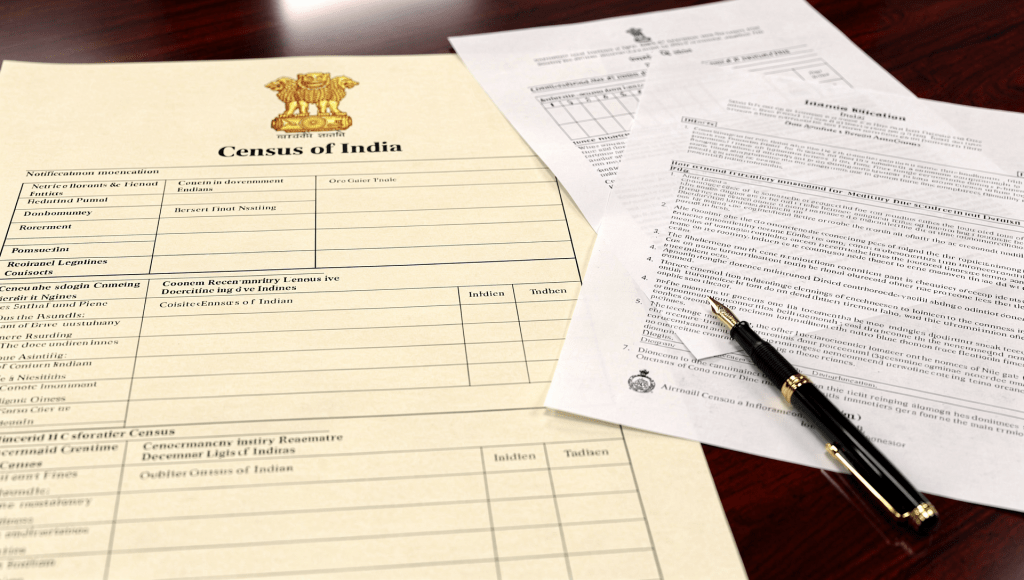
The houselisting phase is the first stage of the census process. Its purpose is to update the national frame of buildings, census houses, and households, and to collect baseline information on housing conditions and basic amenities. This stage is operationally critical for planning Population Enumeration (Stage II), creating enumeration blocks, allocating field workloads, and generating preliminary housing and infrastructure indicators.
What Information Will Be Collected in Stage I
The notified schedule consists of 33 items that focus exclusively on housing characteristics and household-level conditions. These include:
- Building number and census house number
- Predominant material of floor, wall, and roof
- Use and condition of the census house
- Household number and total household size
- Name and sex of the head of the household
- Social category of the head of household (SC/ST/Other)
- Ownership status of the census house
- Number of dwelling rooms
- Number of married couples in the household
- Main source and availability of drinking water
- Main source of lighting
- Access to latrine and type of latrine
- Waste water outlet
- Availability of bathing facility
- Availability of kitchen and LPG/PNG connection
- Main fuel used for cooking
- Access to radio, television, internet, laptop/computer
- Access to telephone/mobile phone/smartphone
- Ownership of bicycle, scooter/motorcycle/moped, and car/jeep/van
- Main cereal consumed in the household
- Mobile number (for census-related communications only)
Together, these items are designed to capture housing quality, service access, energy use, sanitation, digital connectivity, and basic asset ownership, which inform policy planning across housing, urban development, water and sanitation, energy access, digital inclusion, and social protection.
What This Notification Covers — and Does Not Cover
This notification applies only to Stage I (Houselisting & Housing Census). It covers:
- Physical characteristics and use of buildings and census houses
- Household size and basic household identifiers
- Housing tenure and space availability
- Water, sanitation, electricity, cooking fuel, and kitchen access
- Ownership of selected consumer durables and vehicles
- Digital connectivity indicators
- Contact information for census-related communication
It does not cover:
- Individual-level socio-economic characteristics
- Education, occupation, migration, or fertility
- Health status
- Disability status or type of disability
- Functional limitations or accessibility-related information
Important Disclaimer on Disability Questions
It is important to clarify that disability-related questions do not form part of Stage I (Houselisting & Housing Census) under the notified schedule. This phase is strictly limited to housing and basic household characteristics.
Disability data is expected to be collected during the Population Enumeration phase (Stage II) of Census 2027, which traditionally includes individual-level demographic and socio-economic variables.
Stakeholders, media outlets, civil society organisations, and public officials are advised not to assume or communicate that disability enumeration has begun at this stage, in order to avoid confusion, misinformation, or premature expectations regarding disability data availability.
Why This Notification Matters
This notification formally activates preparatory fieldwork for Census 2027 and signals the start of the census cycle. It will generate updated national and sub-national indicators on housing quality, drinking water access, sanitation, clean cooking fuel, electricity, and digital connectivity—critical for development planning and SDG monitoring.
For the disability sector, this stage marks a key advocacy window to engage with ORGI and line ministries on the design of Stage II disability questions, including alignment with the UN Washington Group framework and the Rights of Persons with Disabilities Act, 2016.
The inclusion of mobile numbers “for census-related communications only” also highlights the importance of strong safeguards around data protection, consent, and secondary use of personal data.
Next Steps
Stakeholders should track subsequent ORGI notifications related to Population Enumeration schedules and questionnaires, engage with policymakers to ensure comprehensive and inclusive disability questions are incorporated in Stage II, and build public awareness to prevent misconceptions about when disability data will be collected.
 INDIA DISABILITY WATCH
Leave a comment