
Closing the Data Gap for an Inclusive India
India stands at a crucial juncture as it prepares for . For persons with disabilities, this Census is more than a statistical exercise; it is an opportunity to be seen, recognised, and included in the nation’s plans and policies.
Data shapes policy, funding, and representation. When disability data is incomplete or inaccurate, persons with disabilities risk being left out of the very programs meant to support them.
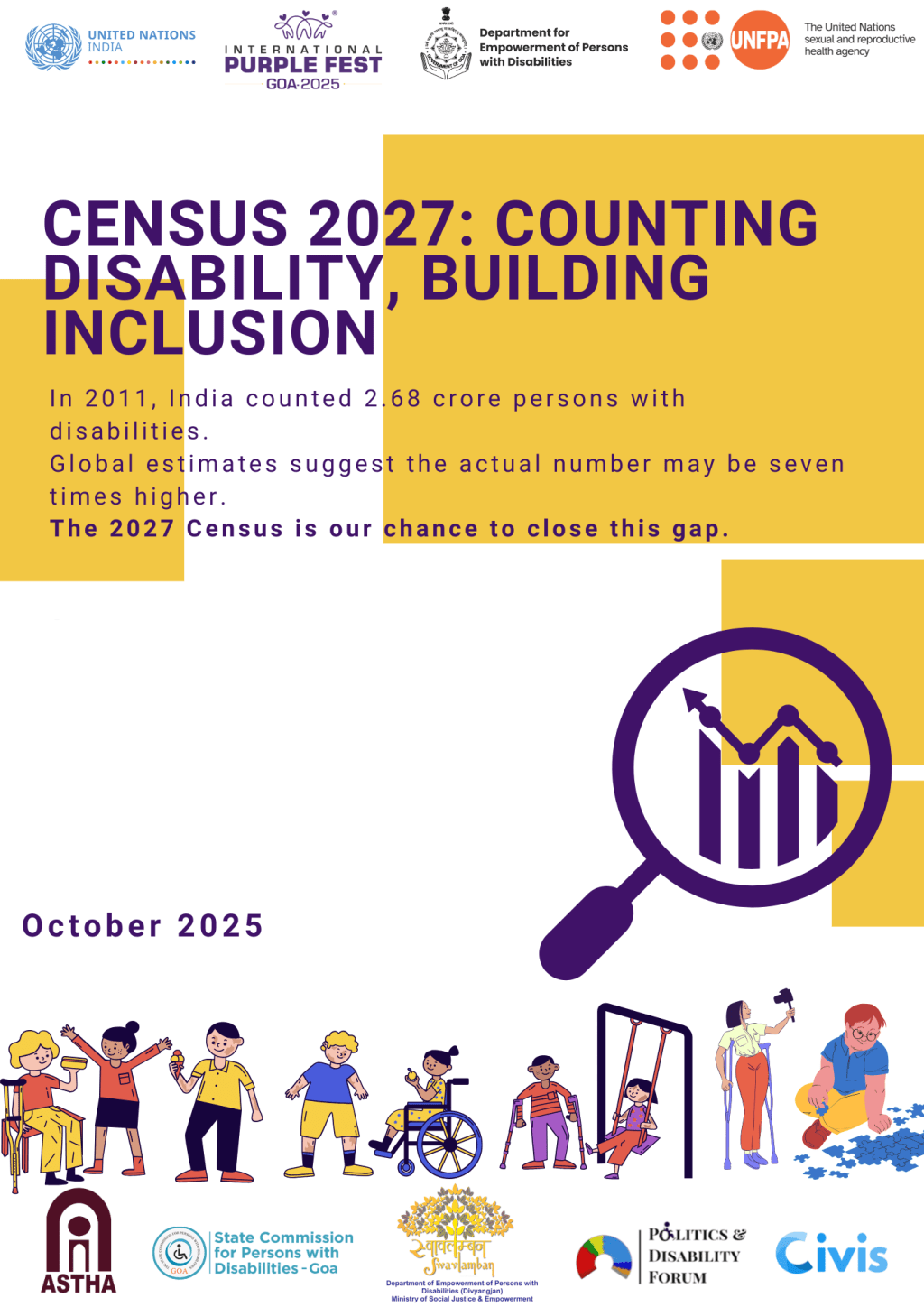
In the 2011 Census, India recorded 2.68 crore persons with disabilities, representing just 2.21% of the population. However, global estimates suggest that nearly 15% of the population lives with some form of disability. This stark gap highlights the urgent need for accurate, inclusive, and participatory data collection.
About the Brochure
The brochure “Census 2027: Counting Disability, Building Inclusion” aims to demystify the Census process and underline why accurate disability data is essential for inclusive development.
Developed collaboratively by ASTHA, India Disability Watch, UNFPA India, and partner organisations, the brochure brings together key insights on:
- The history of how disability has been represented in India’s Census
- The policy relevance of accurate data for planning, budgeting, and rights realisation
- The upcoming changes in Census 2027, including the inclusion of all 21 disabilities under the Rights of Persons with Disabilities (RPwD) Act, 2016
- Strategies for inclusive data collection, such as accessible formats, sign language support, and sensitised enumerator training
- The roles and responsibilities of individuals, families, DPOs, and local administrations in ensuring every person with a disability is counted
Why Disability Data Matters
Data shapes policy, funding, and representation. When disability data is incomplete or inaccurate, persons with disabilities risk being left out of the very programs meant to support them.
Accurate Census data helps:
- Ensure fair budget allocations for disability-related schemes
- Inform inclusive education, employment, and health policies
- Strengthen targeting in welfare and social protection programs
- Enhance political representation and participation
In short, when persons with disabilities are counted correctly, they count more in policymaking.
Census 2027: What’s New
Census 2027 will be digital-first, but accessible paper forms will also be used where needed. For the first time, it will include comprehensive questions covering all disabilities recognised under the RPwD Act.
The Census will also feature:
- Enumerator training modules on disability inclusion
- Use of Indian Sign Language, Braille, and screen-reader friendly materials
- Community outreach to reduce stigma and encourage self-identification
This marks a significant step toward an inclusive national data ecosystem.
Everyone Has a Role to Play
Building inclusive data starts at the community level.
- Persons with disabilities can share accurate information about their disabilities during enumeration.
- Families can support open, stigma-free communication.
- Organisations and DPOs can help monitor accessibility and build trust between communities and Census teams.
- Officials and enumerators can ensure respectful, accessible, and inclusive data collection.
Inclusion begins with participation, and Census 2027 gives everyone a chance to contribute.
Read the full brochure to understand how accurate disability data can transform inclusion and equity in India.
 INDIA DISABILITY WATCH
Leave a comment